
CONSTRUCTION BEGINS ON ELYGATOR, A NEW ELECTROLYZER FOR LARGE-SCALE RENEWABLE HYDROGEN

THE NETHERLANDS
Up to 23,000 tons of renewable hydrogen per year will be produced, while avoiding up to 300,000 tons of CO₂ emissions annually. This is the goal of ELYgator, a 200 MW electrolyzer located in Maasvlakte (Port of Rotterdam), whose construction began in the summer of 2025. Read more p.34
€ 500Mof investment
A NEW ASU TO SUPPORTTHE ENERGY TRANSITION AND SEMICONDUCTOR MARKET GROWTH

JAPAN
On the Japanese island of Naoshima, a new Air Separation Unit (ASU) will be built at the Mitsubishi Materials site. Designed to meet growing demand for copper—a key material for the energy transition—it will support the expansion of the Japanese leader in this sector.
1,400 tonsper day of oxygen
Air Liquide will supply oxygen and nitrogen, while co-producing argon and neon, rare gases used in particular in the semiconductor sector for lithography, and in the transport and construction fields. Benefiting from a subsidy from Japan’s Ministry of Economy, Trade and Industry, the project also aims to strengthen domestic neon production, which is currently largely imported.
LOW-CARBON ELECTRICITY: 3 TWH OF ADDITIONAL PPAS IN 2025
Air Liquide is continuing its voluntary low-carbon electricity sourcing approach, a core lever of its Climate Transition Plan. In 2025, this approach led to the start-up of an additional 3 TWh per year under multi-year power purchase agreements (PPAs), particularly in carbon-intensive countries such as China and South Africa, as well as the signing of a first PPA in India.Read more p.39
3.5 Mtof CO2 avoided annuallyfrom 2027 onward thanks to the PPAs signed since 2020
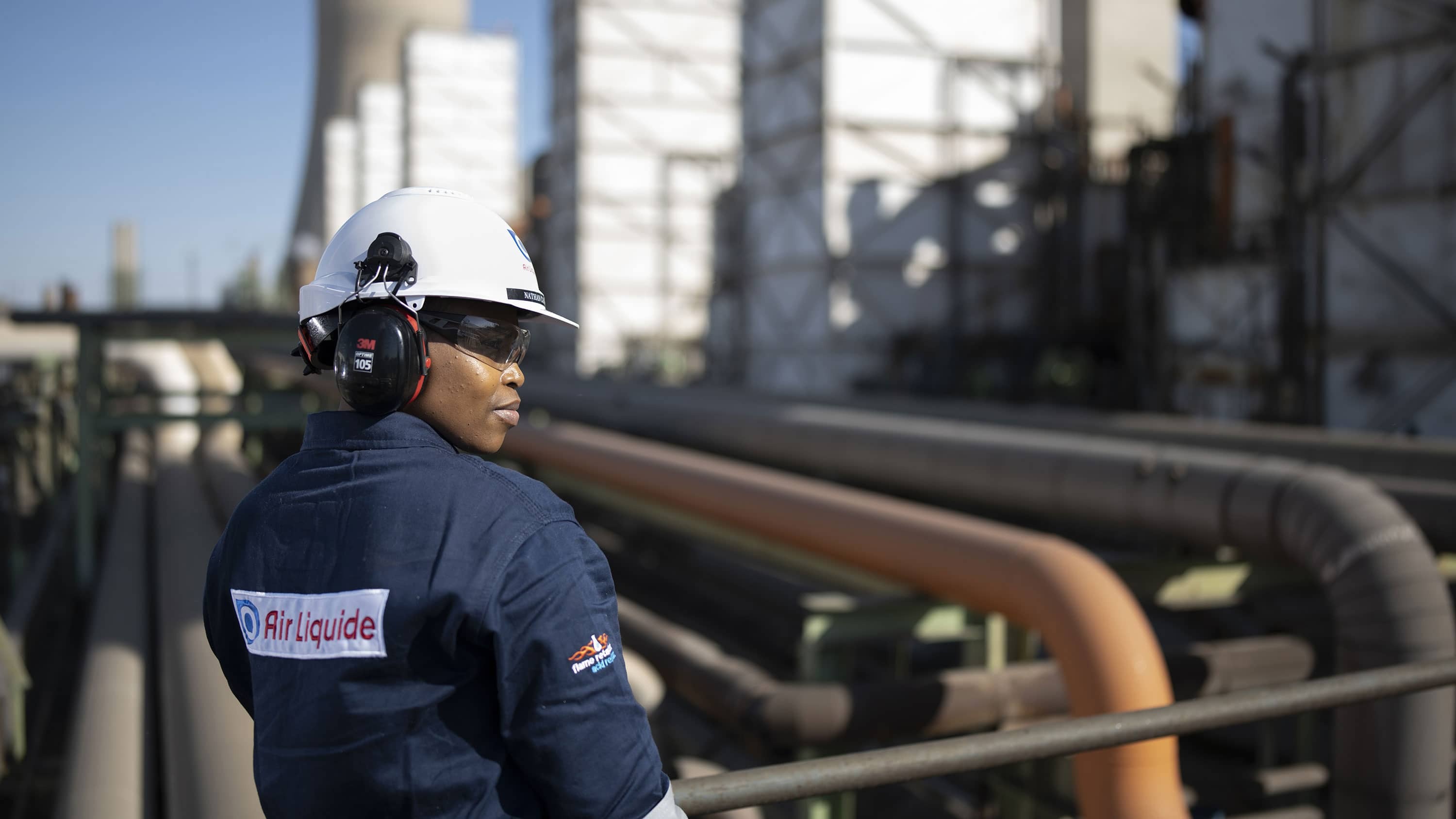
DRIVING DEMAND FOR LOW-CARBON PRODUCTS: THE LAUNCH OF CARBON MEASURES
In the October 2025 lead-up to COP 30 in Brazil, a coalition of industrial and financial players including Air Liquide, Banco Santander, ExxonMobil and Nucor launched the Carbon Measures (CM) association. Now with 25 members, its ambition is to make low-carbon solutions economically competitive and create markets for low-carbon products.
While decarbonization technologies exist today, they are not yet sufficiently valued to trigger the large-scale investment that the energy transition requires. CM seeks to address this by promoting mechanisms that value products according to their carbon content. The goal is to generate demand and thereby encourage investment in decarbonization technologies.
To ensure tangible outcomes, CM focuses on the ten products (notably steel, cement, and fuels) that account for 70% of industrial CO2 emissions. The initiative aims to accelerate the implementation of carbon footprint-based public policies (“Product Mandates”). To support this, a panel of independent experts, established by CM and the International Chamber of Commerce, is developing a product-level carbon accounting system to provide reliable and comparable data.