
How does Ammonia cracking work?
Ammonia cracking relies on separating ammonia molecules into nitrogen and hydrogen molecules. In practice, ammonia (NH₃) is fed in gaseous form into a catalytic cracking furnace heated to over 500°C. This very high-temperature process separates nitrogen (N₂) and hydrogen (H₂) molecules. The hot cracked gas is then cooled and cleaned before undergoing a pressure swing adsorption process, which isolates hydrogen molecules and purifies them. The N₂ captured by the absorbent is reinjected into the system and combined with other fuels to feed the burners and heat the catalyst. The steam generated during cooling is recycled, and combustion in the furnace emits no CO₂-making ammonia cracking not only an innovative technology, but also a low-emission one.

By carrying out this project, we are developing a new technology, a new process to supply renewable hydrogen to our customers in chemicals, petrochemicals, and mobility.

30 tonsper day of cracked Ammonia
A KEY MOLECULE FOR LOW-CARBON INDUSTRY
Ammonia offers significant advantages. Upstream in the value chain, it can be produced with a low-carbon footprint in regions with abundant renewable resources, such as solar and wind energy. Secondly, unlike hydrogen-which is extremely light and volatile-ammonia can be transported easily in large quantities and over long distances. This is a critical factor, as it addresses one of the major challenges facing the development of the hydrogen value chain. Finally, liquid ammonia transport infrastructures already exist: 25 million tonnes(1) circulate worldwide each year. These three factors make ammonia cracking a technology that can be deployed at scale by leveraging existing infrastructure, an essential asset for industrializing the process.
FROM LAB TO PLANT
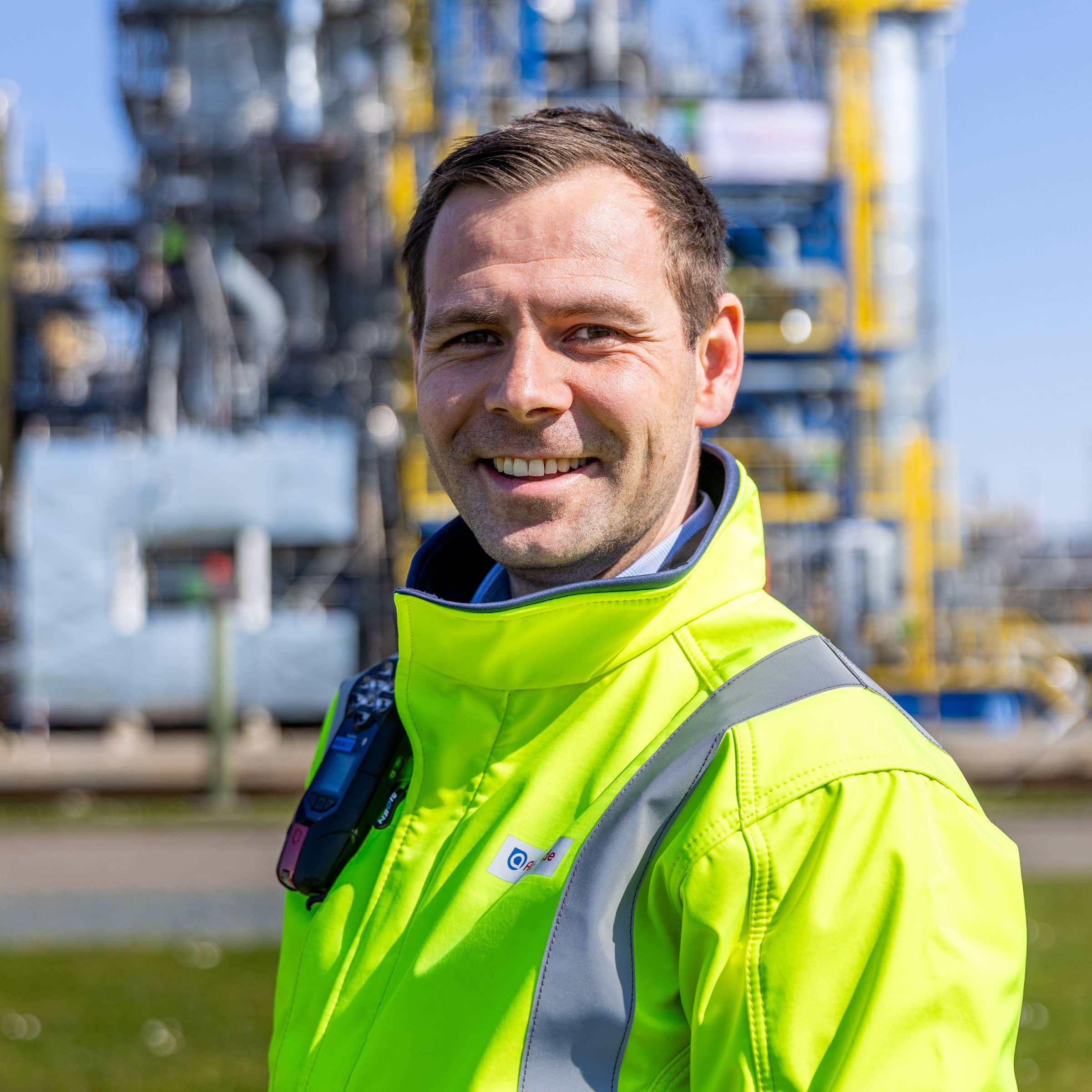
The pilot unit installed in the industrial basin of the port of Antwerp-Bruges demonstrates Air Liquide’s ability to move from development to industrial implementation. The project is a direct result of the synergy between the R&D, engineering and operations teams. It stands as an example of how industrial vision becomes reality thanks to the Group’s ability to deliver useful and concrete solutions. Hydrogen has applications in numerous sectors. “By carrying out this project, we are developing a new technology, a new process to supply renewable hydrogen to our customers in chemicals, petrochemicals, and mobility,” says Felix Cock, Energy Transition Technology & Strategy Manager, Northern and Central Europe, at Air Liquide.
UP NEXT...
Europe, South Korea and Japan are already seeing a growing interest in the importing and cracking of ammonia. The International Energy Agency estimates that by 2050, the renewable and low-carbon ammonia market could reach 200 million tonnes per year(2). Air Liquide is positioning itself to seize these opportunities, with a new project already underway-also in the port of Antwerp-Bruges: a new Ammonia cracking unit, along with the construction of a hydrogen liquefier. The project, which has received a 110 million euro subsidy from the European Innovation Fund, would mark another step toward the industrialization of ammonia cracking technology and open the way for global-scale deployment of the value chain.